The mood tracker built
for bipolar disorder.
Built by someone who lives with bipolar. Your data stays on your device. AI catches the patterns you'd miss. Clinician report included.
Not a wellness app. Not a generic mood tracker. A tool designed for people who take their condition seriously, by someone who has to.
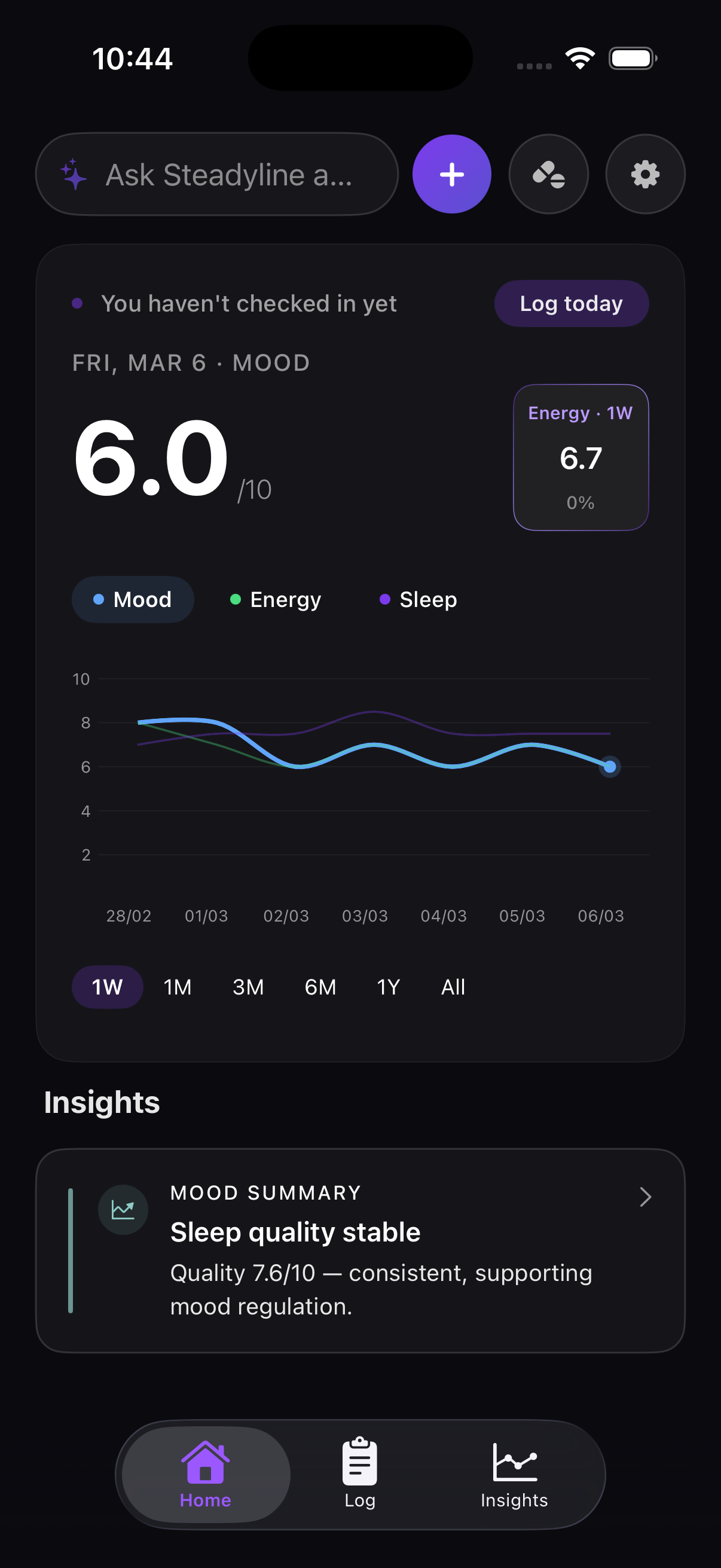
What Makes It Different
Built for bipolar. Not adapted from a wellness app.
AI Insights
Your personal AI analyses patterns across mood, sleep, energy, and habits to surface insights you'd miss.
Privacy-First
Your mental health data stays on your device. Cloud AI only receives anonymized, aggregated data — never your raw entries.
Mood & Analytics
Beautiful charts and clinician-ready reports that reveal your emotional patterns over time.
Smart Alerts
Get notified about concerning patterns before they escalate. Early intervention, powered by AI.
Medication Tracker
Track medications with reminders and swipe-to-confirm. See how meds correlate with your mood.
AI Chat
Talk to an AI that knows your patterns. Ask questions about your mood history and get personalised answers.
From the Blog
Latest writing

Scientists Finally Know What's Happening in Our Brains
New research from 2025 mapped 298 genetic regions linked to bipolar disorder, found proteins in brain fluid that predict future episodes, and is building personalized brain maps to guide treatment. Here's what it actually means.

Bipolar Disorder in Women: Hormones, PMS & Missed Diagnosis
How bipolar disorder in women changes across PMS, menstrual cycles, pregnancy, postpartum, and perimenopause, plus what to track before appointments.

What to Track Between Psychiatrist Visits (And Why It Matters)
Your psychiatrist has 15 minutes. Here's exactly what to track between visits so you stop forgetting the important stuff. Practical bipolar tracking guide.

Is This Hypomania or Just a Good Day? A Practical Checklist
How to tell the difference between hypomania and genuine happiness. A practical checklist from someone with bipolar who asks this question constantly.
Popular Topics
Explore by topic
Understanding Episodes
See allEarly warning signs of mania
Recognizing manic episodes before they escalate
Is this hypomania or just a good day?
How to tell the difference before it matters
The 48-hour decision rule
A practical framework for acting on warning signs
Your data knows before you do
How pattern tracking predicts episodes early
Bipolar mixed states explained
When mania and depression collide
Sleep & Stability
See allSleep is the first domino
Why sleep is the leading indicator for mood episodes
What sleep deprivation does to bipolar
How sleep loss triggers mood episodes
Bipolar and circadian rhythm
The science of light, sleep, and mood stability
Tracking gaps are data too
What your missed entries actually reveal
Medication & Psychiatrist
See allMedication is a foundation, not a fix
Setting realistic expectations for medication management
What to track between psychiatrist visits
Making every appointment count
Bipolar tracker with doctor report
How clinician-ready reports change psychiatry visits
The 15-minute psychiatrist problem
Why appointments are too short — and how to fix that
Relationships & Daily Life
See allBipolar and relationships
Navigating intimacy and communication with bipolar
Identifying your bipolar triggers
Using data to find what sets episodes in motion
Living with bipolar: daily life guide
Practical strategies for sustainable stability
The people around you see it first
Why external perspective matters in episode recognition
Tracking & App Guides
See allComplete guide to bipolar mood tracking
Everything you need to know about tracking bipolar
How to track bipolar patterns
Practical methods for catching patterns early
Daylio alternative for bipolar
Why general mood trackers fall short for bipolar
eMoods alternative
Comparing eMoods with modern bipolar tracking
Is there an app to track bipolar moods?
A comprehensive look at the options available today
Why mood alone isn't enough
The other signals that complete the picture
Privacy & AI Ethics
Privacy policyHow Steadyline keeps your data secure
On-device storage, encryption, and what never leaves your phone
What AI should and shouldn't do in mental health
Hard limits on AI in a clinical-adjacent app
Why I don't gamify mental health
Streaks and badges are wrong for serious conditions
Most mental health apps are built for good days
Why wellness-first design fails people with bipolar
New science: bipolar genetics and proteomics
What the latest research reveals about bipolar biology
Why I built Steadyline
Nothing else took bipolar disorder seriously enough
Built by Sam
Software engineer who lives with bipolar disorder. I built Steadyline because nothing else took the problem seriously enough. I write about mood tracking, sleep, and the honest reality of managing a serious condition.
More about meStart understanding yourself today.
iOS coming soon. Android is live now.